What is web-native software?
+
×
Web-native software is software that is designed and developed specifically to run inside a web browser. Unlike traditional desktop applications, web-native platforms are built using modern web technologies and can be accessed through browsers such as Chrome, Edge, or Safari. Many modern SaaS applications and cloud estimating software platforms are web-native.
What is hosted desktop software?
+
×
Hosted desktop software is a traditional desktop application that runs on a remote server rather than directly on a user's computer. Users typically access the software through remote desktop environments, virtual machines, or hosted workstations. While hosted desktop software may be delivered through cloud infrastructure, the application itself was originally designed as desktop software.
Is web-native software the same as cloud software?
+
×
Not always. Web-native software is typically cloud-based, but not all cloud software is web-native. A web-native platform is built specifically for browser access, while hosted desktop software may also be cloud-based but was originally designed as a desktop application.
What is the difference between web-native and hosted desktop software?
+
×
The primary difference is how the software was built. Web-native software is designed from the ground up for browser-based use, while hosted desktop software is a traditional desktop application delivered through cloud infrastructure. Both approaches can provide remote access, but the underlying architecture and user experience are different.
Why does software architecture matter for contractors?
+
×
Software architecture can affect usability, accessibility, maintenance requirements, scalability, and collaboration. Contractors evaluating construction estimating software should understand how different software architectures may impact estimating workflows, project management, and long-term technology strategies.
Is web-native software better than hosted desktop software?
+
×
Neither approach is automatically better for every organization. The right solution depends on a contractor's workflows, technology goals, IT resources, and business requirements. Some companies prefer web-native software for browser-based accessibility, while others may choose hosted desktop software to support existing desktop workflows.
What is the difference between web-based software and remote desktop software?
+
×
Web-based software is designed to run directly in a browser and is typically accessed through a URL. Remote desktop software provides access to a desktop application running on another computer or server. While both can provide remote access, the user experience and underlying technology are different.
Why are contractors moving toward web-native estimating software?
+
×
Many contractors are evaluating web-native estimating software because it can provide browser-based access, centralized estimating data, simplified deployment, and modern collaboration capabilities. These benefits can help estimating teams improve efficiency while reducing IT complexity.
Is EL4 web-native heavy civil estimating software?
+
×
Yes. EL4 is a web-native heavy civil estimating software platform developed specifically for utility contractors, highway contractors, excavation contractors, paving contractors, earthwork contractors, and site development contractors. EL4 was built to support modern estimating workflows, production-based estimating, and unit-price bidding.
Who should consider web-native estimating software?
+
×
Web-native estimating software may be a strong fit for contractors seeking browser-based access, centralized estimating information, modern workflows, and reduced IT overhead. It is commonly evaluated by heavy civil contractors, construction estimators, chief estimators, and construction leaders looking to modernize their estimating processes.

 Heavy Civil Construction Software Guide
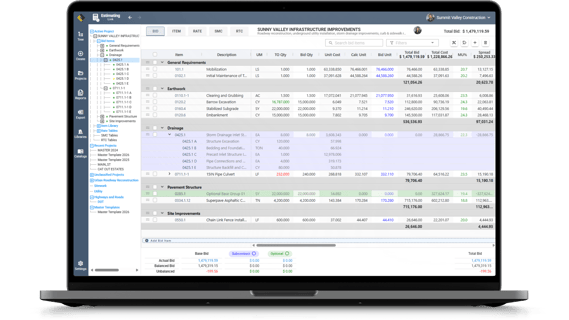 EL4 is an example of a web-native heavy civil estimating software platform designed specifically for infrastructure contractors.