Takeoff tells you quantities. Cost estimating determines profit. Here’s why heavy civil contractors rely on construction cost estimating software—not just takeoff tools—to bid accurately and protect margins.
Construction Takeoff vs Cost Estimating: What’s the Difference?
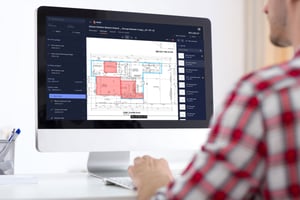
In heavy civil construction, takeoff and cost estimating are closely related—but they solve very different problems. Takeoff focuses on measuring quantities: how many feet, yards, tons, or units of work are involved based on plans, bid items, or field information. It answers one question: how much work is there?
Cost estimating starts where takeoff ends. It takes those quantities and turns them into dollars by applying labor hours, equipment time, production rates, hauling costs, overhead, and risk. This is where decisions are made that determine whether a bid is competitive—and whether it will actually make money if awarded. (Check out more info on cost estimating by US D.O.T.)
Many contractors use takeoff software to measure quantities, then export those quantities into spreadsheets or shared files where the actual cost estimating happens. Labor hours, equipment time, production rates, and risk are built manually, often across multiple versions of the same estimate. When bids don’t hit or numbers change from job to job, it becomes hard to tell whether the issue started with the takeoff or with the estimating process itself.
That’s why understanding construction cost estimating vs takeoff matters—it helps contractors recognize when takeoff is working fine and the real problem is the lack of a cost estimating software built to turn quantities into accurate, repeatable bids.
Cost Estimating Software for Heavy Civil Contractors Who Already Use Takeoff
Estimating Link is designed for contractors who already have takeoff covered and need a more reliable way to build costs around those quantities. Instead of replacing takeoff, Estimating Link allows contractors to import takeoff quantities directly into the estimating system, eliminating re-entry, spreadsheet-heavy workflows, and manual calculations.
From there, Estimating Link focuses on the cost side of estimating—labor, equipment, production rates, hauling, overhead, and risk—within a structured system built specifically for heavy civil construction. Costs are organized in one place, making it easier to update numbers as conditions change, and maintain control over how estimates are built.
Estimating Link was built by a heavy/civil contractor and designed specifically for heavy/civil project bidding. It provides unit and lump sump pricing - built by calculating crew production rates along with material, subcontractor, overhead costs, and more. Teams can build, review, and adjust estimates without breaking formulas or managing multiple versions of the same job. The result is a more efficient estimating process, better consistency across bids, and greater confidence in the numbers being submitted.
For contractors who already rely on takeoff tools, Estimating Link fills the gap by providing cost estimating software that works alongside existing workflows—helping turn measured quantities into complete, well-structured estimates.
Heavy Civil Contractor Results from Using Cost Estimating Software
Estimating Link users consistently report measurable improvements in how they estimate, bid, and manage costs. For example, LA Contracting replaced an error-prone Excel workflow with Estimating Link and saw bid volume triple while improving accuracy and detail. Less time was spent manually recalculating estimates after every requested revision, and the team finished work that used to take hours in a fraction of the time.
In addition to efficiency gains, Estimating Link helps contractors build estimates with clearer cost visibility and reporting. Detailed line-item breakdowns allow teams to better understand direct costs, indirect costs, and markup for each bid item and the project as a whole. This gives confidence in bids and enables more transparent communication with clients on pricing adjustments when scope changes.
Real-world results from Estimating Link customers:
-
Bid volume increase up to 3x — while maintaining detail and accuracy.
-
Profitability increase of 15–20% on most projects, with some jobs seeing up to a 50% increase in profit.
- Efficiency Improvements of up to 80% - Daily estimating tasks completed in excel now take a fraction of the time in Estimating Link.
These real outcomes show what heavy civil contractors see when they move from spreadsheet-based estimating to dedicated cost estimating software: more efficient workflows, better cost control, and estimates that reflect real project variables instead of guesswork. This builds confidence in bids and supports a smoother, more structured estimating process.
Heavy Civil Cost Estimating Software: The Missing Piece After Takeoff
Heavy civil contractors don’t need to choose between takeoff and cost estimating—they need both working together. Takeoff defines the scope and quantities of work. Cost estimating is what turns those quantities into a complete, well-structured bid. The results highlighted earlier come from contractors who already had takeoff covered and added a dedicated cost estimating system to strengthen how their bids were built.
Estimating Link is designed to work alongside existing takeoff tools, allowing contractors to import quantities and focus on what actually drives the estimate: labor, equipment, production rates, hauling, overhead, and risk. That combination is what enables the efficiency, consistency, and control seen in TCLI customer results—without forcing teams to change how they measure work.
For contractors who want to see how cost estimating software works with their current takeoff process, the next step is simple. Viewing cost estimating in action makes it easier to understand how quantities flow into the estimate and how they are built and adjusted.
If you’re ready to see how Estimating Link fits into your estimating workflow, booking a demo is the best way to evaluate whether it’s the right solution for your team.